 Voxly Vision
Does this apply to me?
The BPRs apply to:
- Business-to-business marketing and advertising
- Any advertising that compares your product or service with a competitor's
They are enforced primarily by Trading Standards and the CMA, but the comparison conditions are reproduced almost word-for-word in the CAP and BCAP codes, so the ASA is where most comparative-advertising complaints actually land. They sit alongside the DMCC Act, which covers business-to-consumer practices.
Key rules
The conditions a comparative ad must satisfy:
- Compare like with like — products meeting the same needs or intended for the same purpose.
- Be objective and verifiable — comparisons must rest on material, relevant, verifiable features, and the audience must be able to check them.
- Don't mislead about either your own or the competitor's offering.
- Don't denigrate a competitor or take unfair advantage of their reputation or trademark.
Common breaches
Where comparative ads go wrong:
- Unverifiable claims — asserting you're faster, cheaper or better with no way for the audience to check.
- Cherry-picked comparisons that aren't representative.
- Comparing dissimilar products that don't meet the same need.
- Denigrating a rival rather than making a fair, factual comparison.
How Voxly Vision checks an ad against this code
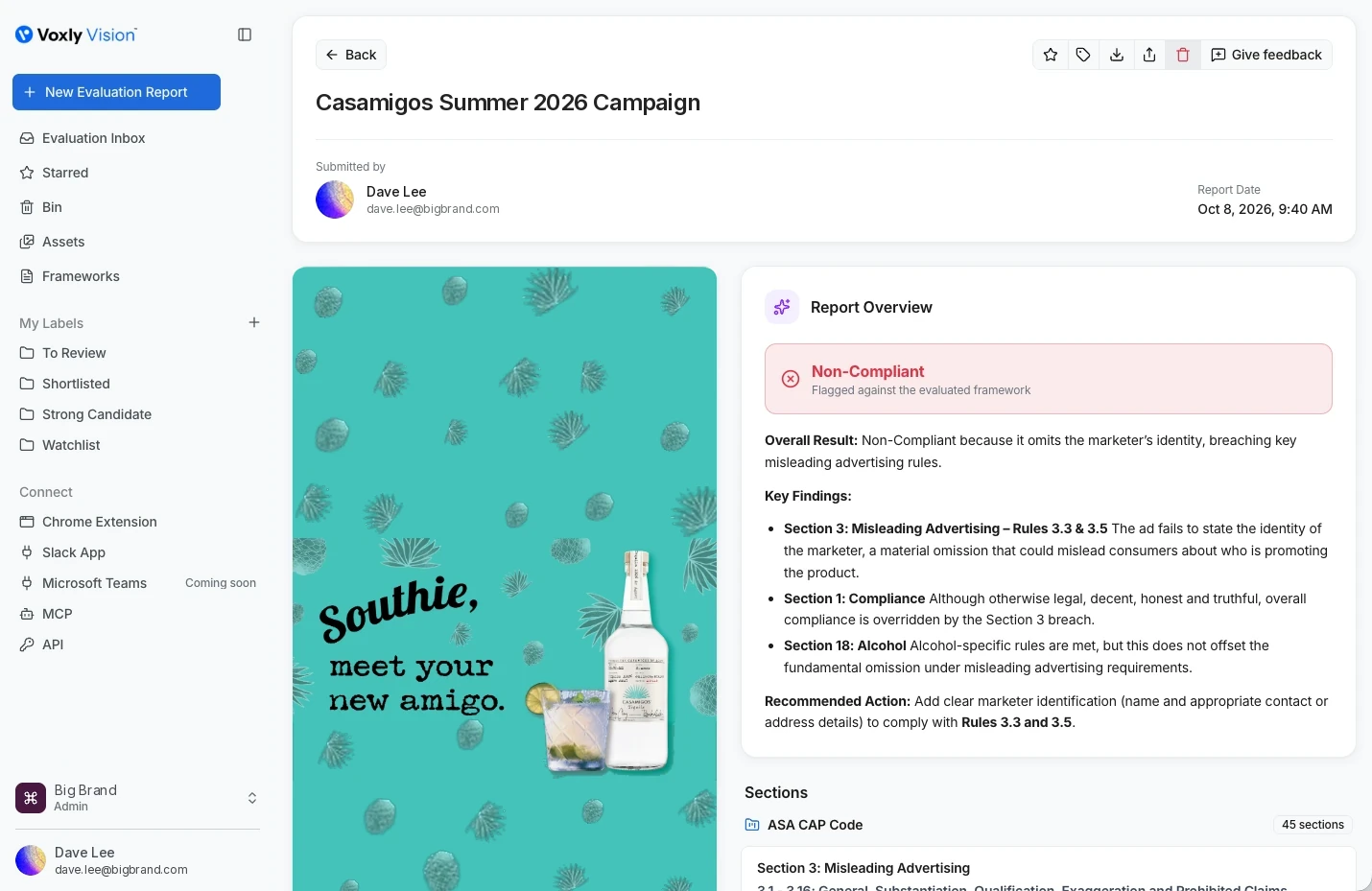
Every report shows an overall verdict, the rules at stake and a recommended fix. For comparative ads, Voxly Vision checks that claims against a rival are like-for-like, verifiable and don't denigrate the competitor.
Recent rulings
We Buy Any Car
Upheld · 6 Aug 2025
TV and YouTube ads implied selling to We Buy Any Car was quicker and more certain than other car buying sites. Rivals Motorway and Carwow complained: no comparative evidence, and no way to check it.
Rules breached: 3.33 Comparisons, 3.35 Verifiable, 3.1 Misleading
Frequently asked questions
Can I name a competitor in my advertising?
Yes, comparative advertising is permitted — but only if the comparison is fair, objective, verifiable and not misleading or denigrating.
What does 'verifiable' mean?
The audience must be able to check the comparison, typically because you've made the supporting evidence available.
Who enforces the BPRs?
Trading Standards and the CMA enforce the regulations directly, but the ASA handles most comparative-ad complaints through the mirrored CAP and BCAP rules.
Do the BPRs cover ads to consumers?
The BPRs focus on business-to-business marketing and comparative advertising; consumer-facing unfair practices now sit mainly under the DMCC Act.