 Voxly Vision
Does this apply to me?
The CAP Code applies to virtually every form of marketing communication that isn't on TV or radio. That includes:
- Ads on a brand's own website and across its social media channels
- Paid digital advertising — display, paid search and paid social
- Influencer and affiliate content, where a brand has control or payment is involved
- Emails, direct mail and other direct marketing
- Print ads, posters, leaflets, packaging claims and sales promotions
It is written by the Committee of Advertising Practice (CAP) and enforced by the Advertising Standards Authority (ASA), the UK's independent advertising regulator. Broadcast ads on TV and radio fall under a separate but closely related rulebook, the BCAP Code.
Key rules
Most rulings come back to a small number of principles rather than obscure clauses:
- Don't mislead. Claims must be accurate and you must hold evidence to back them up before the ad runs. This is the single biggest source of complaints.
- Substantiate claims. If you say "clinically proven" or "UK's number one", you need documentary proof ready.
- Be socially responsible. Ads must not cause serious or widespread offence, or encourage harmful behaviour.
- Make ads obviously identifiable. Influencer and paid content must be clearly labelled as advertising — the "#ad" rule.
- Protect under-18s. Extra restrictions apply to anything that could appeal to or target children.
Common breaches
The patterns that repeatedly trip brands up:
- Unsubstantiated performance or health claims — saying a product does something without evidence on file.
- Hidden advertising — influencer posts that don't make the commercial relationship clear.
- Misleading pricing and promotions — "was/now" pricing, hidden fees, or offers with conditions buried in the small print.
- Exaggerated environmental claims — vague "eco" or "carbon neutral" wording the ASA now scrutinises heavily.
- Qualifications that contradict the headline — a bold claim rescued only by small-print caveats.
How Voxly Vision checks an ad against this code
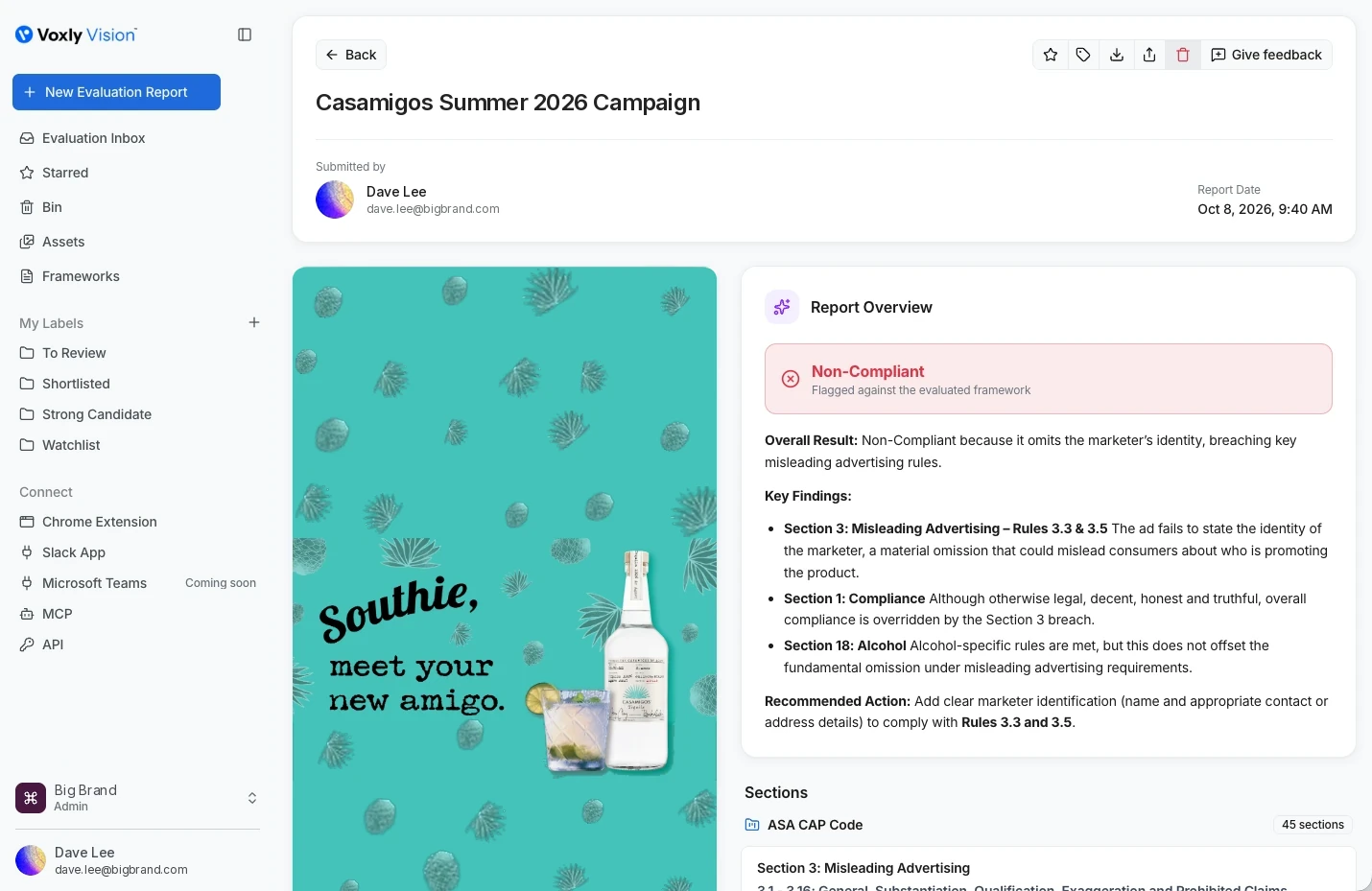
A tequila post on Instagram, checked in under a minute. Voxly Vision flagged it under CAP Code rules 3.3 and 3.5 because nothing told viewers it was an ad, and suggested the fix before it went live.
Recent rulings
Do Health (Menwell Ltd)
Upheld · 7 Oct 2026
Two social posts from the health app's co-founder implied its blood tests could help prevent or diagnose conditions like type 2 diabetes and Alzheimer's, and give sharper advice than standard health guidance. No evidence to back either claim.
Rules breached: 3.1 Misleading, 3.7 Substantiation, 12.1 Health claims
Frequently asked questions
Is the CAP Code law?
Not directly, but it's backed by legal sanctions. Persistent breaches can be referred to Trading Standards or the regulator, and non-compliant ads can be removed and publicised.
Who enforces the CAP Code?
The Advertising Standards Authority (ASA) handles complaints and rulings; the Committee of Advertising Practice (CAP) writes the rules and offers guidance.
Does the CAP Code cover social media and influencers?
Yes. Any marketing a brand controls or pays for — including influencer posts — falls under the Code and must be clearly identifiable as advertising.
What happens if you breach the CAP Code?
The ad must be withdrawn or amended, the ruling is published on the ASA website, and repeat offenders can face further sanctions including ad removal and referral to legal bodies.