 Voxly Vision













Does this apply to me?
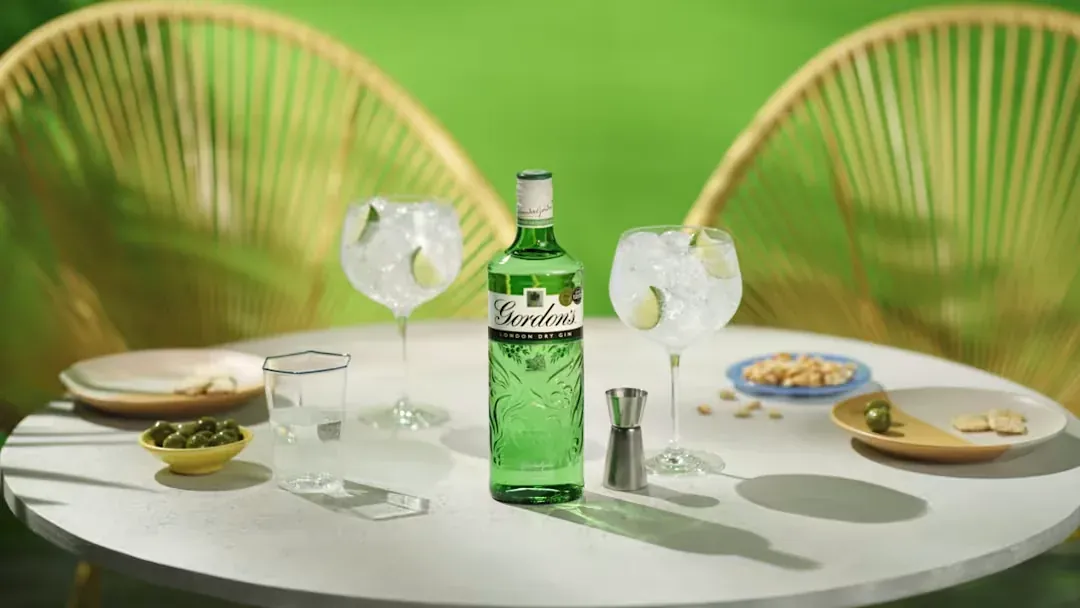
The rules apply to anyone who pays for an ad for an identifiable less healthy food or drink product shown to UK audiences. That includes manufacturers, retailers, restaurants, delivery apps and franchisees, even if they don't make the food themselves.
A product is caught when it is in one of 13 categories, such as soft drinks, crisps, breakfast cereals, chocolate and sweets, cakes and biscuits, pizza and ready meals, and it scores 4 or more (food) or 1 or more (drink) on the government's nutrient profiling model.
Main exemptions:
- Small and medium businesses with fewer than 250 employees. For franchises, the whole network counts.
- Brand advertising that doesn't show an identifiable less healthy product.
- Business-to-business ads, and online ads not aimed at UK audiences.
- A business's own website and social channels, where it doesn't pay for placement.
Key rules
- TV and on-demand: no ads for identifiable less healthy products between 5:30am and 9pm.
- Online: no paid-for ads for identifiable less healthy products at any time. That covers paid social, search, display, video and paid placements on any platform.
- Identifiable means recognisable. If a product in the ad can't be told apart from a less healthy one, it counts as showing the less healthy product.
- Brand characters count when they personify a specific less healthy product.
Separate rules restrict volume promotions such as "buy one get one free" on less healthy products in medium and large retailers in England. Those have been enforced since 1 October 2025.
Common breaches
- Showing the wrong variant. A healthier product that looks the same as a less healthy one counts as the less healthy one.
- Brand mascots shaped or styled like a specific product.
- Franchisees who assume the small business exemption applies to them when the wider network has 250 or more staff.
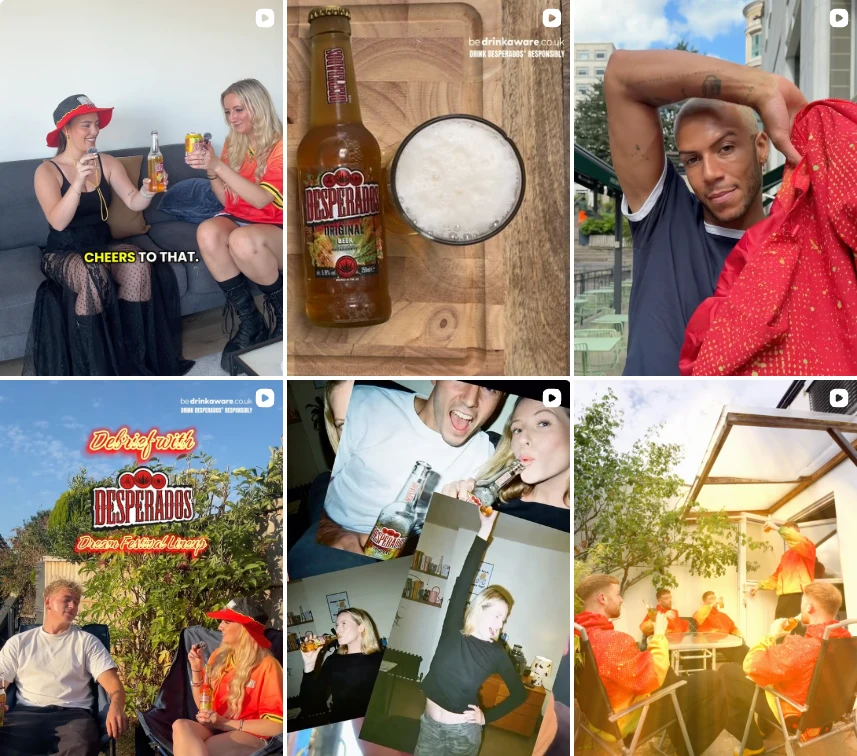
- Meal deal ads listing burgers, fries, wings and similar items in paid social posts.
- No nutrient profiling evidence on file when the ASA asks for it.
How Voxly Vision checks a food ad
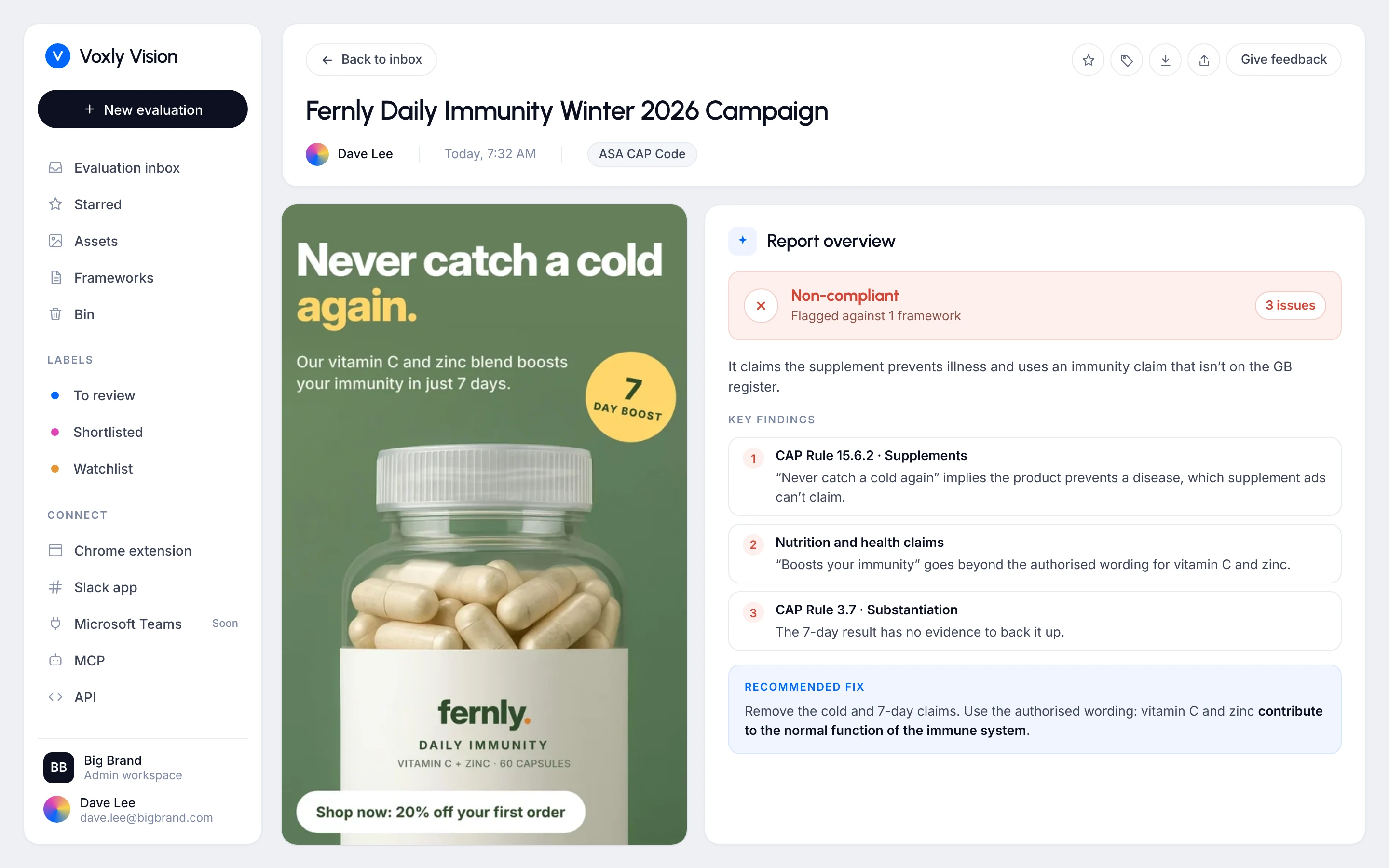
Voxly Vision identifies the food and drink shown in an ad, flags products likely to fall in the less healthy categories and checks where the ad will run, so you know whether it can go out as planned.
Recent rulings and enforcement
Mars Wrigley Confectionery UK Ltd
Upheld · 2026
A paid Instagram ad for M&M's showed a brand character whose shape matched Peanut M&M's. The ASA said brand characters that personify a specific less healthy product don't qualify for the brand advertising exemption.
S&E1 Ltd t/a Morley's Woking
Upheld · 2026
A franchisee's paid Instagram ad listed burger and fried chicken meal deals. The wider franchise network employed 250 or more people, so the small business exemption didn't apply.
KFC, Domino's, Papa John's and Uber Eats
Not upheld · 2026
Ads showed products that were not less healthy, or brand advertising without an identifiable less healthy product. The ASA accepted the evidence in each case.
Frequently asked questions
What does HFSS stand for?
High in fat, salt or sugar. The legislation itself uses the term "less healthy" food and drink.
When did the HFSS advertising ban start?
The TV watershed and the online ban have applied since 5 January 2026. The industry agreed to follow them voluntarily from 1 October 2025.
Can I still advertise food on social media?
Yes, if the product isn't less healthy, if the ad is brand advertising without an identifiable less healthy product, if you are an exempt small business, or if the post is on your own channels and not paid for.
Are small businesses exempt?
Yes. Businesses with fewer than 250 employees are exempt from the advertising restrictions. For franchises, the ASA looks at the whole network, not the individual outlet.
Who enforces the HFSS rules?
The ASA enforces them for online and non-broadcast ads, and Ofcom for TV and on-demand services. Persistent breaches can be referred to Ofcom or Trading Standards.